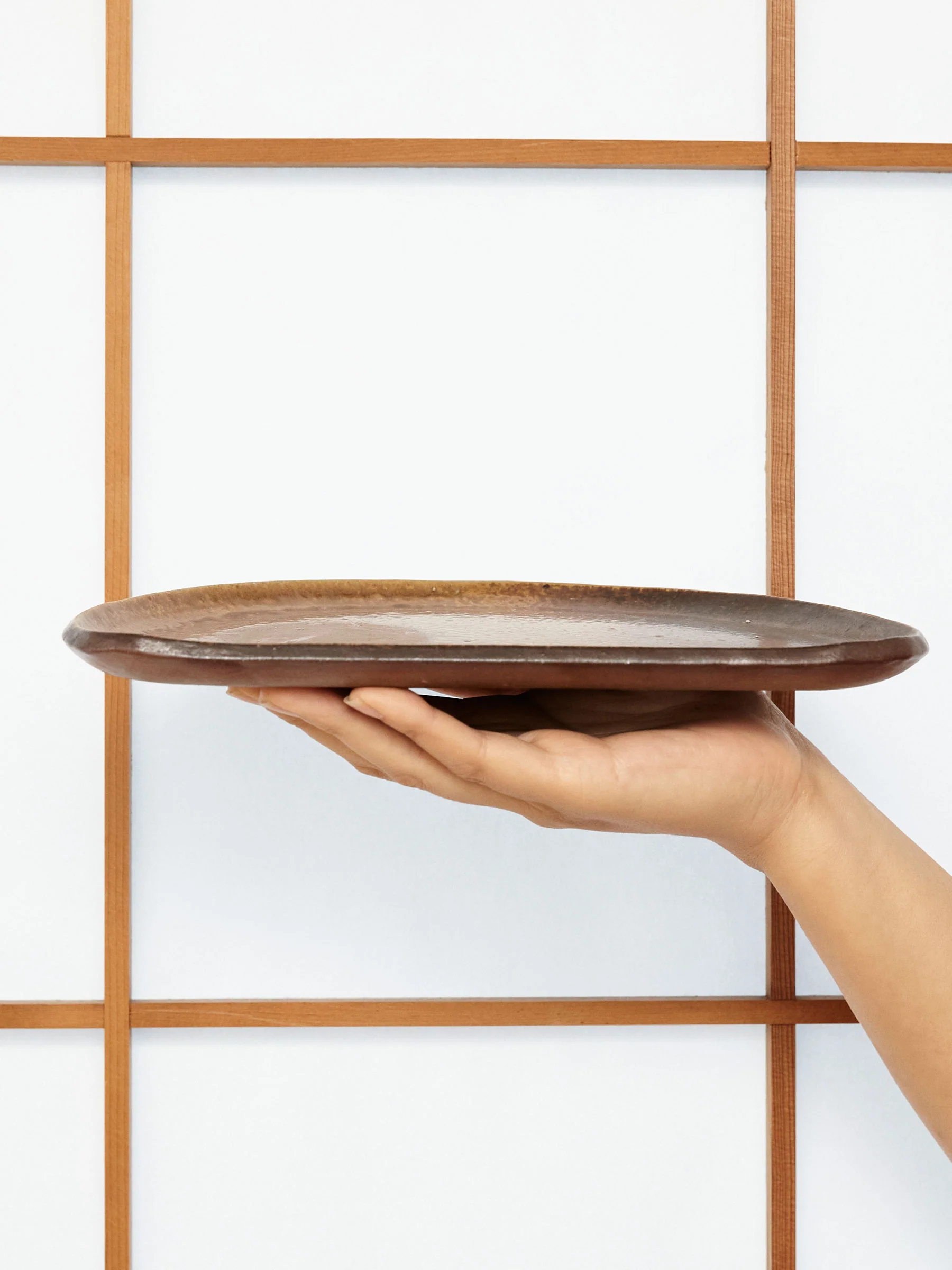
Half-Moon Bizen Ware Sushi Plate by Hozan (10"/26cm)
Why We Love It
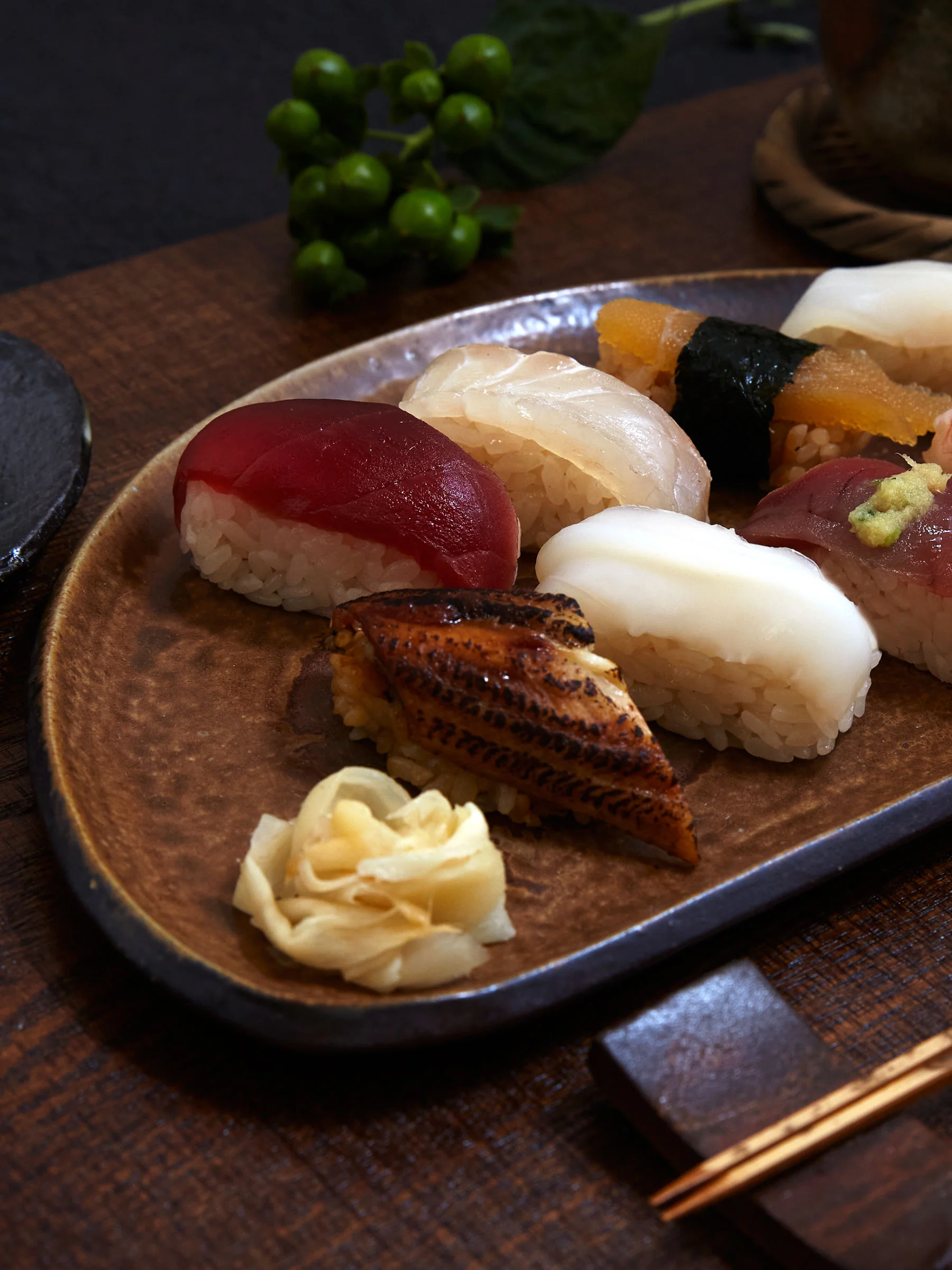
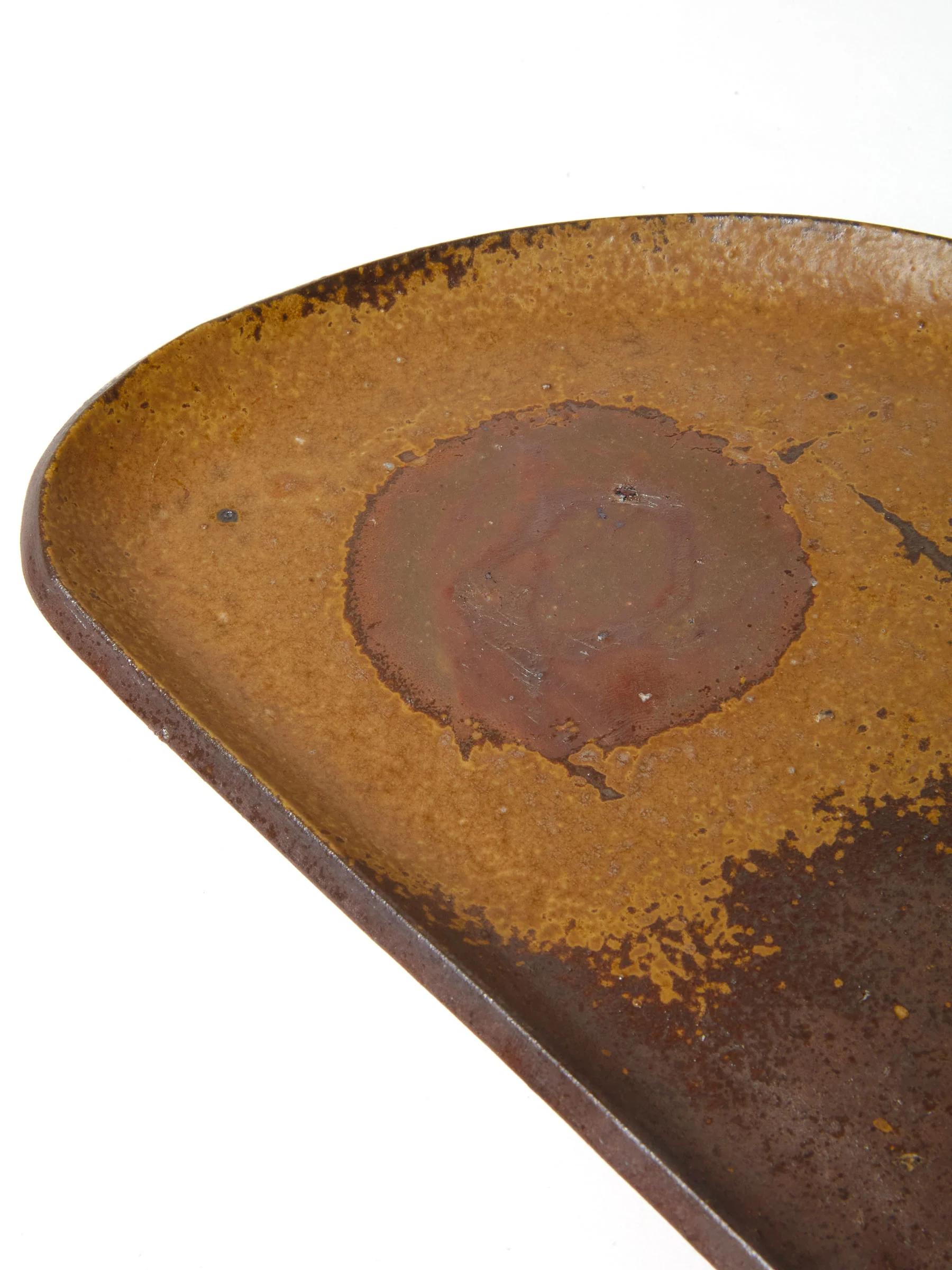
This authentic Bizen ware handcrafted sushi plate is ideal for presenting sushi, savoury dishes, cakes, and sweets. The edges are slightly curved, so it can safely accommodate sauces and gravies too.
Bizen ware is one of the most remarkable Japanese pottery. Usually not glazed, Bizen-yaki has a natural appearance. The rusticity of Bizen-yaki has been appreciated for centuries for its wabi sabi nature: unique, austere, imperfect, gaining charm and beauty with time and use.
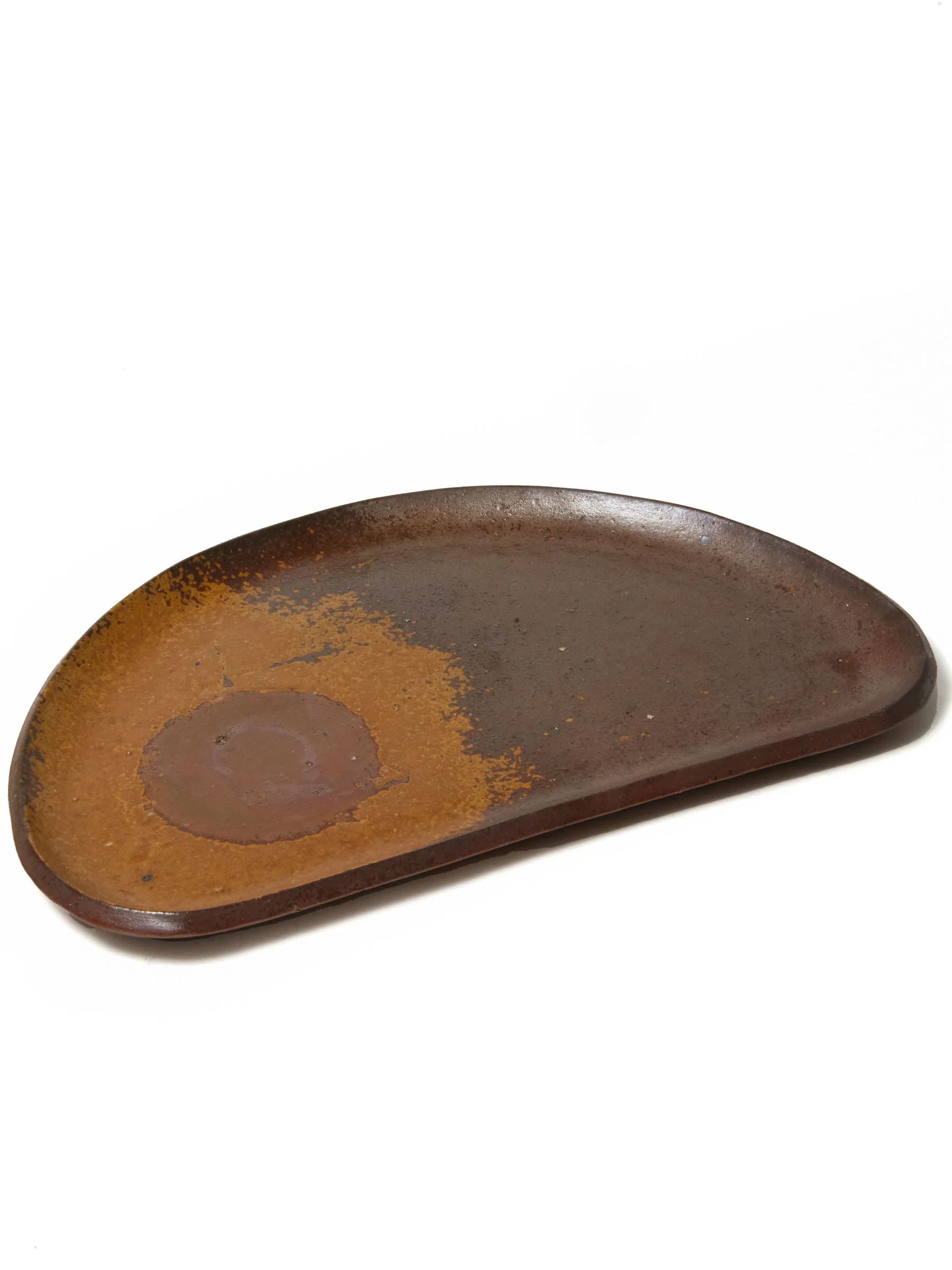
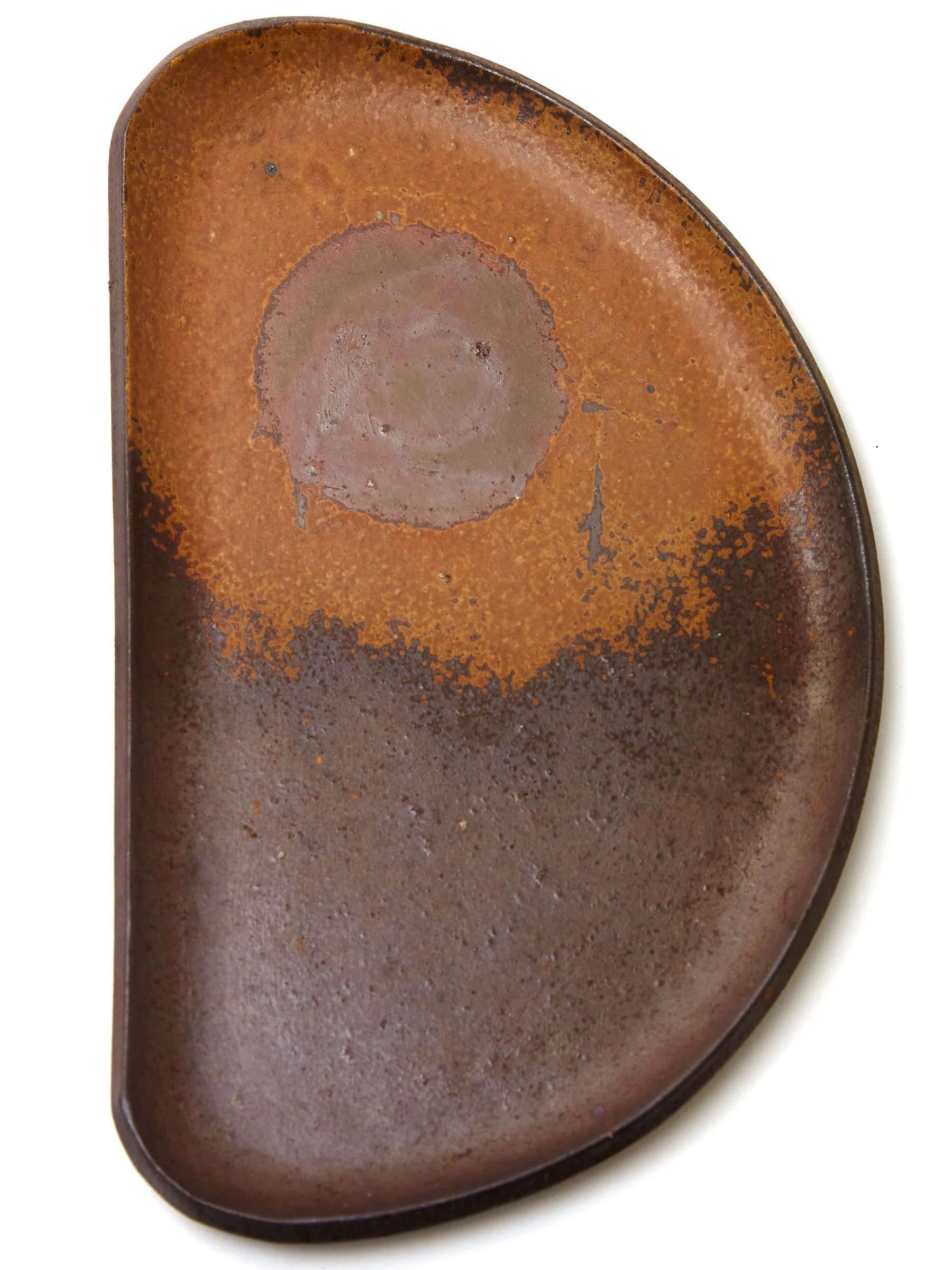
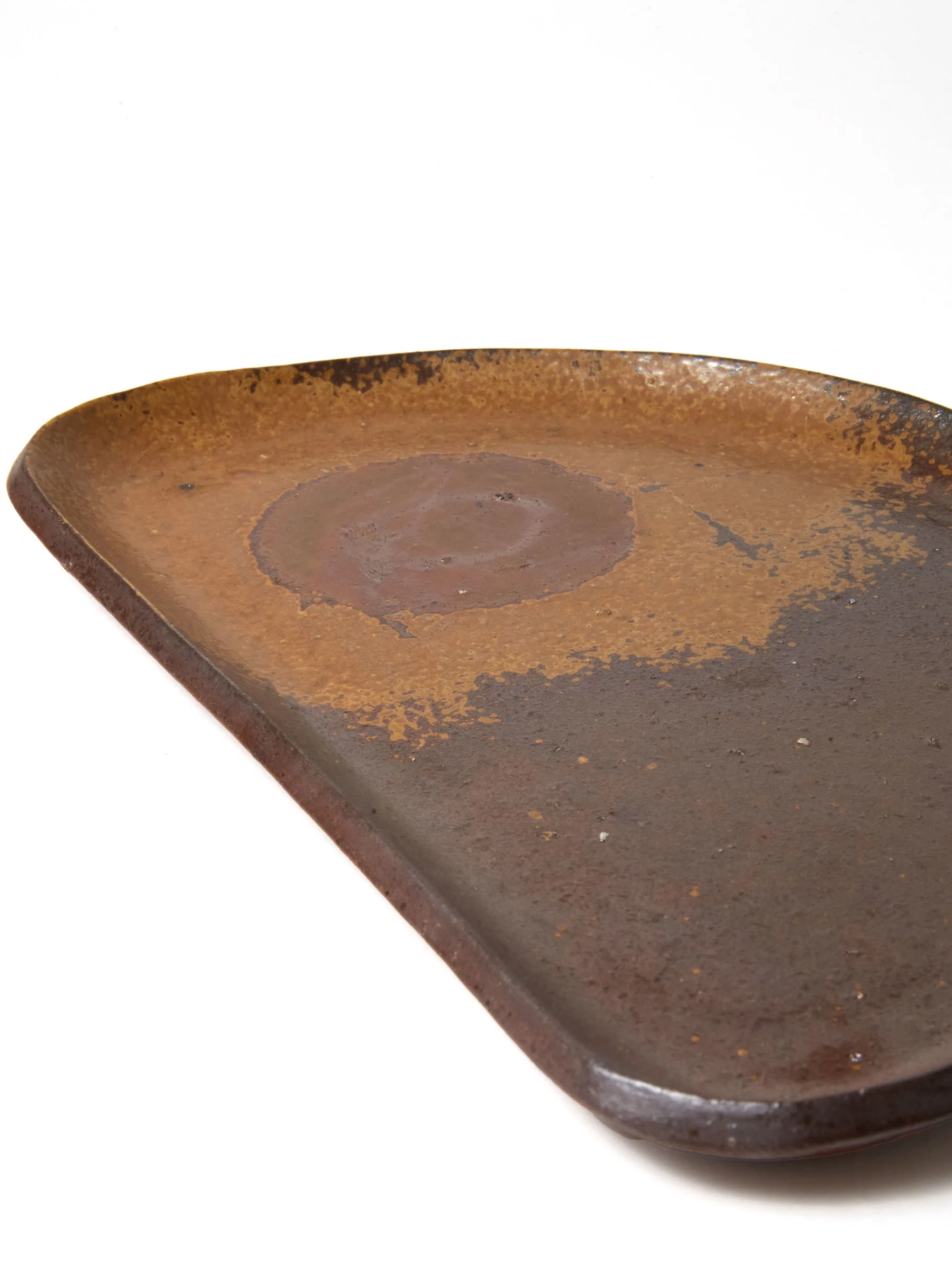
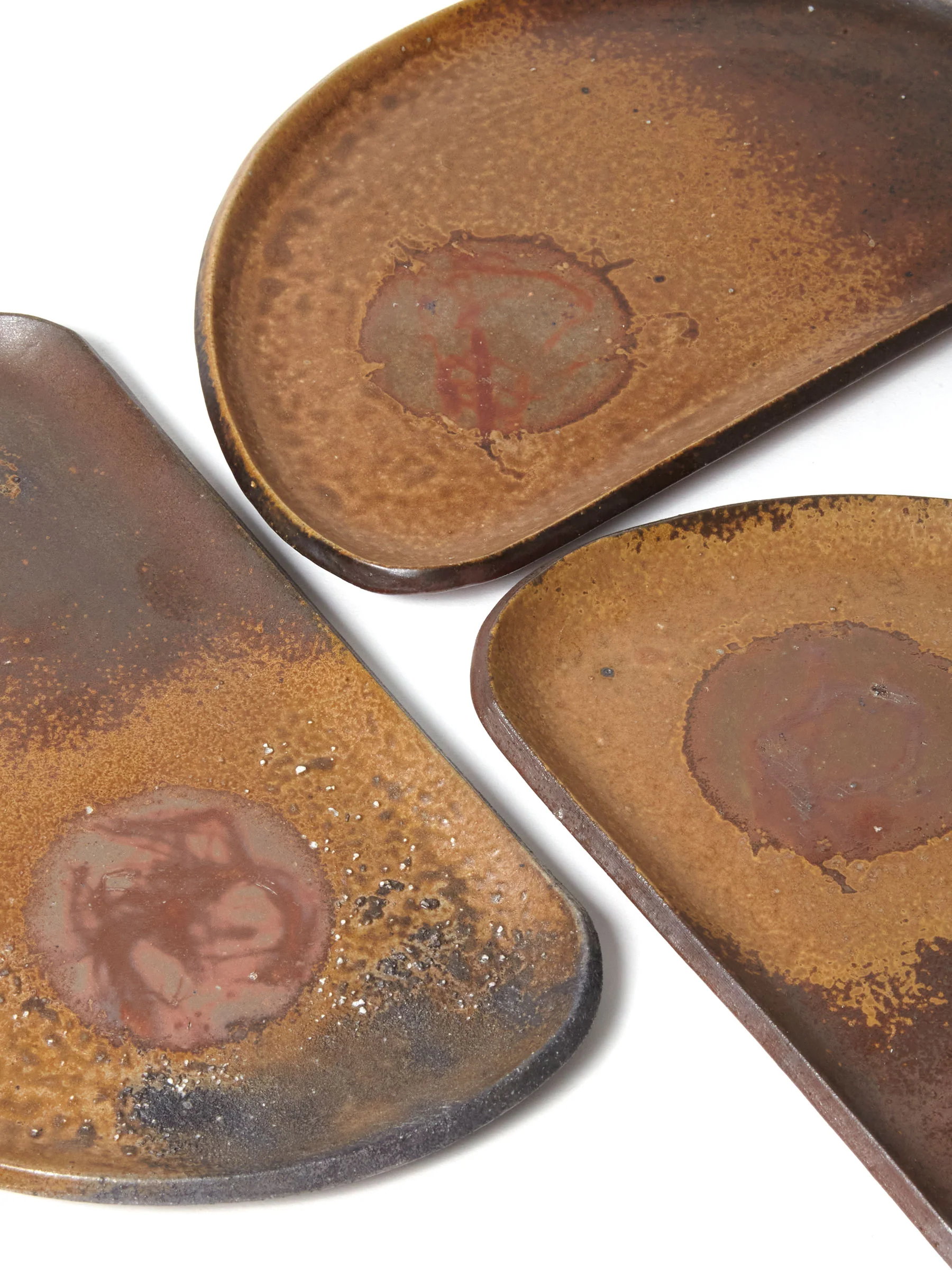
Inside the ancient cave kiln, pine tree ash flies and sticks to the Bizen clay, adding a natural glaze to the sushi plate. This glossy ochre accent is named goma (胡麻, lit. “sesame seeds”) and is a distinctive feature of Bizen-yaki. Half of the plate is covered with pine tree ash and decorated with a round pattern called botamochi (牡丹餅, lit. “peony mochi”, a pink rice ball wrapped in a layer of red beans). This striking technique is achieved by placing small round disks on the pottery, to protect them from flying ash.
Why Choose a Sushi Plate from Bizen
Bizen-yaki (備前焼) is a type of pottery created in the city of Bizen, in Okayama prefecture. Bizen is one of Japan's Six Ancient Kilns and the development of these kilns and techniques have been carefully preserved, representing a vital contribution to Japan’s traditional arts.
In the 16th century, Bizen-yaki gained the favor of Sen no Rikyu, the famous master of the tea ceremony, for its wabi-sabi aesthetics. This notion of wabi-sabi is a key concept in Japanese sensibility: the appreciation of the ephemeral beauty of an imperfect object, which becomes more beautiful as time passes, and consequently acquires its own charm and an untranslatable idea of serenity.
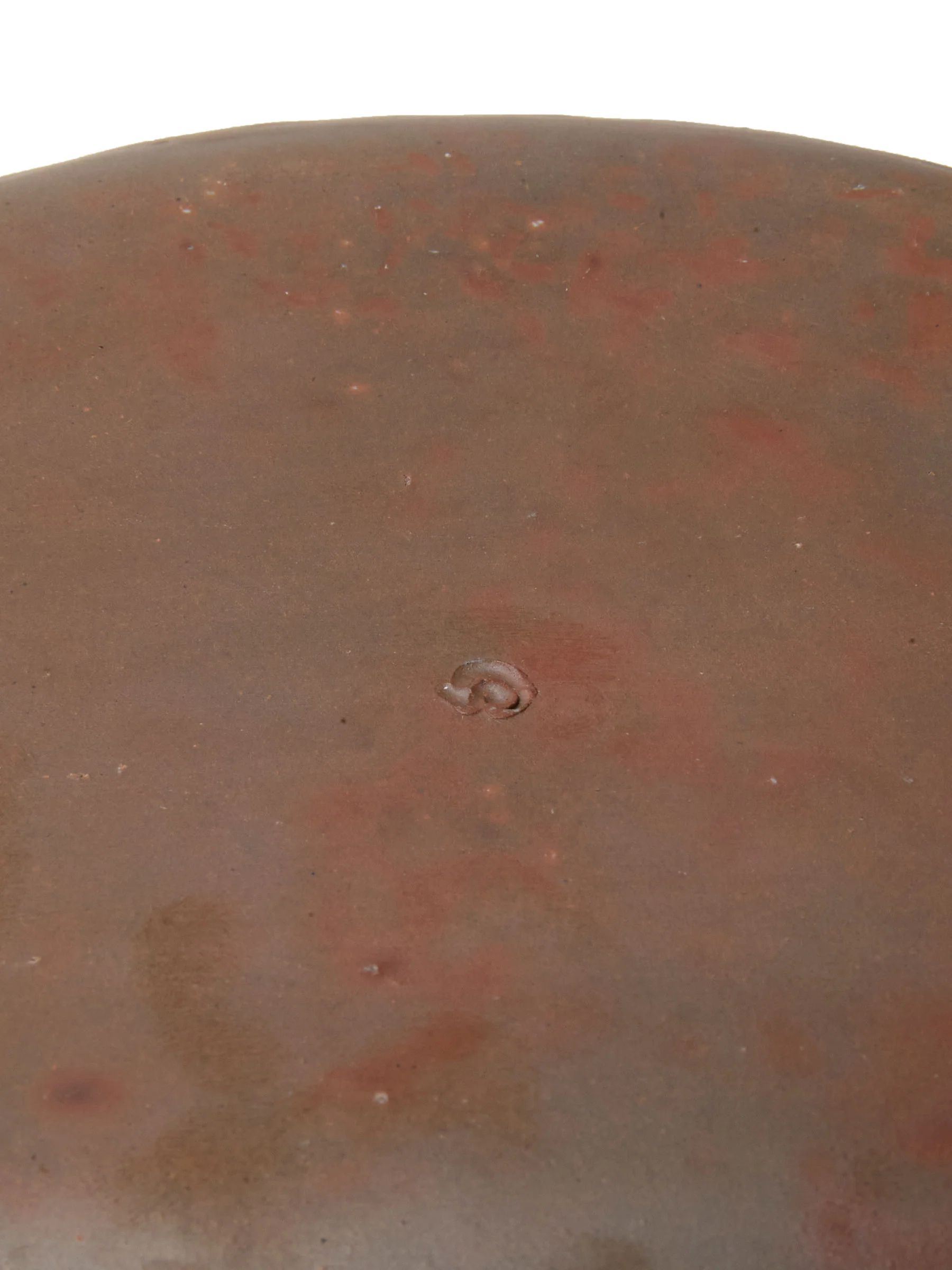
Working with Bizen clay requires master craftsmanship to shape the wares and position them expertly inside the anagama climbing kiln. During the long wood-firing process, the artisans don’t touch the wares, so it takes years of experience to know how to place the ceramics in the kiln to achieve the greatest outcome. The final appearance of each piece is not entirely predictable, making every dish or teacup wholly original and unique. Making Bizen pottery is so arduous that most kilns only do a firing once or twice a year, or even less.
This sushi platter is handcrafted by ceramic artist Toshiaki Mori at the Hozan Kiln in the town of Bizen. A direct descendant from the six Bizen-yaki potter families, Mori-san is the 19th generation master artisan, who not only was selected and received awards at various national ceramics exhibitions, but also exhibited his works internationally, in the USA, UK, and Taiwan.
Caring For Your Bizen Ware Sushi Plate
After use, the plate should be rinsed thoroughly with hot water, which will help it to dry faster. To preserve the delicate surface of the plate, do not wash it in the dishwasher.
Details
- Half-moon sushi plate
- Handmade in Japan
- Free gift-wrapping in Japanese furoshiki cloth
- Goma (sesame) and botamochi (peony mochi) techniques
- As each handmade product is unique, there will be differences in size, color, and pattern from the photographs above.
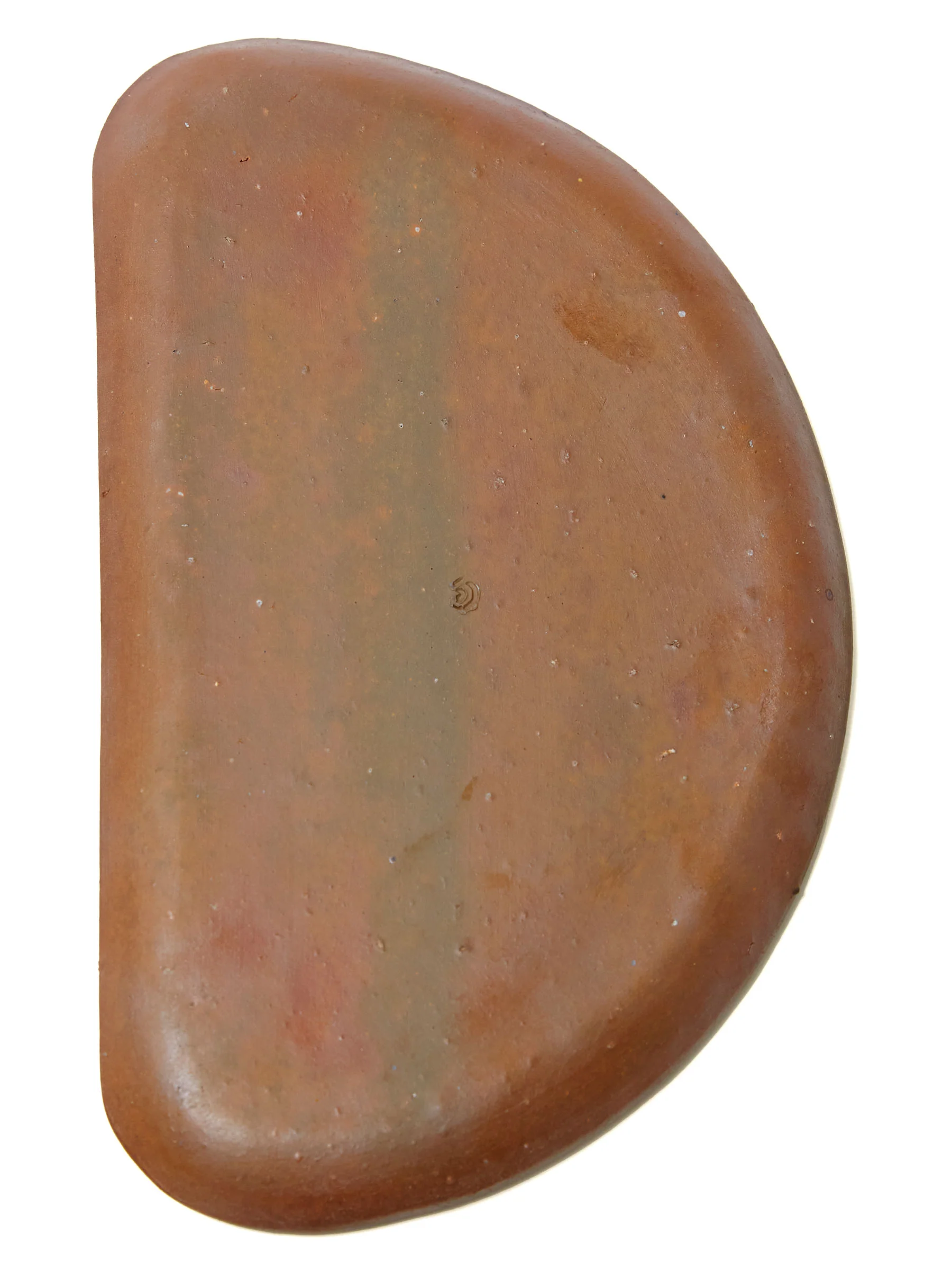
- Size: length 6½” (16.5 cm), width 10” (26 cm), height ½” (1.5cm)
- Product code: 93314BZ
Product Information
Product Information
Shipping & Returns
Shipping & Returns


Half-Moon Bizen Ware Sushi Plate by Hozan (10"/26cm)
Half-Moon Bizen Ware Sushi Plate by Hozan (10"/26cm)
Why We Love It
This authentic Bizen ware handcrafted sushi plate is ideal for presenting sushi, savoury dishes, cakes, and sweets. The edges are slightly curved, so it can safely accommodate sauces and gravies too.
Bizen ware is one of the most remarkable Japanese pottery. Usually not glazed, Bizen-yaki has a natural appearance. The rusticity of Bizen-yaki has been appreciated for centuries for its wabi sabi nature: unique, austere, imperfect, gaining charm and beauty with time and use.
Inside the ancient cave kiln, pine tree ash flies and sticks to the Bizen clay, adding a natural glaze to the sushi plate. This glossy ochre accent is named goma (胡麻, lit. “sesame seeds”) and is a distinctive feature of Bizen-yaki. Half of the plate is covered with pine tree ash and decorated with a round pattern called botamochi (牡丹餅, lit. “peony mochi”, a pink rice ball wrapped in a layer of red beans). This striking technique is achieved by placing small round disks on the pottery, to protect them from flying ash.
Why Choose a Sushi Plate from Bizen
Bizen-yaki (備前焼) is a type of pottery created in the city of Bizen, in Okayama prefecture. Bizen is one of Japan's Six Ancient Kilns and the development of these kilns and techniques have been carefully preserved, representing a vital contribution to Japan’s traditional arts.
In the 16th century, Bizen-yaki gained the favor of Sen no Rikyu, the famous master of the tea ceremony, for its wabi-sabi aesthetics. This notion of wabi-sabi is a key concept in Japanese sensibility: the appreciation of the ephemeral beauty of an imperfect object, which becomes more beautiful as time passes, and consequently acquires its own charm and an untranslatable idea of serenity.
Working with Bizen clay requires master craftsmanship to shape the wares and position them expertly inside the anagama climbing kiln. During the long wood-firing process, the artisans don’t touch the wares, so it takes years of experience to know how to place the ceramics in the kiln to achieve the greatest outcome. The final appearance of each piece is not entirely predictable, making every dish or teacup wholly original and unique. Making Bizen pottery is so arduous that most kilns only do a firing once or twice a year, or even less.
This sushi platter is handcrafted by ceramic artist Toshiaki Mori at the Hozan Kiln in the town of Bizen. A direct descendant from the six Bizen-yaki potter families, Mori-san is the 19th generation master artisan, who not only was selected and received awards at various national ceramics exhibitions, but also exhibited his works internationally, in the USA, UK, and Taiwan.
Caring For Your Bizen Ware Sushi Plate
After use, the plate should be rinsed thoroughly with hot water, which will help it to dry faster. To preserve the delicate surface of the plate, do not wash it in the dishwasher.
Details
- Half-moon sushi plate
- Handmade in Japan
- Free gift-wrapping in Japanese furoshiki cloth
- Goma (sesame) and botamochi (peony mochi) techniques
- As each handmade product is unique, there will be differences in size, color, and pattern from the photographs above.
- Size: length 6½” (16.5 cm), width 10” (26 cm), height ½” (1.5cm)
- Product code: 93314BZ
Original: $678,000.00
-70%$678,000.00
$203,400.00Product Information
Product Information
Shipping & Returns
Shipping & Returns
Description
Why We Love It
This authentic Bizen ware handcrafted sushi plate is ideal for presenting sushi, savoury dishes, cakes, and sweets. The edges are slightly curved, so it can safely accommodate sauces and gravies too.
Bizen ware is one of the most remarkable Japanese pottery. Usually not glazed, Bizen-yaki has a natural appearance. The rusticity of Bizen-yaki has been appreciated for centuries for its wabi sabi nature: unique, austere, imperfect, gaining charm and beauty with time and use.
Inside the ancient cave kiln, pine tree ash flies and sticks to the Bizen clay, adding a natural glaze to the sushi plate. This glossy ochre accent is named goma (胡麻, lit. “sesame seeds”) and is a distinctive feature of Bizen-yaki. Half of the plate is covered with pine tree ash and decorated with a round pattern called botamochi (牡丹餅, lit. “peony mochi”, a pink rice ball wrapped in a layer of red beans). This striking technique is achieved by placing small round disks on the pottery, to protect them from flying ash.
Why Choose a Sushi Plate from Bizen
Bizen-yaki (備前焼) is a type of pottery created in the city of Bizen, in Okayama prefecture. Bizen is one of Japan's Six Ancient Kilns and the development of these kilns and techniques have been carefully preserved, representing a vital contribution to Japan’s traditional arts.
In the 16th century, Bizen-yaki gained the favor of Sen no Rikyu, the famous master of the tea ceremony, for its wabi-sabi aesthetics. This notion of wabi-sabi is a key concept in Japanese sensibility: the appreciation of the ephemeral beauty of an imperfect object, which becomes more beautiful as time passes, and consequently acquires its own charm and an untranslatable idea of serenity.
Working with Bizen clay requires master craftsmanship to shape the wares and position them expertly inside the anagama climbing kiln. During the long wood-firing process, the artisans don’t touch the wares, so it takes years of experience to know how to place the ceramics in the kiln to achieve the greatest outcome. The final appearance of each piece is not entirely predictable, making every dish or teacup wholly original and unique. Making Bizen pottery is so arduous that most kilns only do a firing once or twice a year, or even less.
This sushi platter is handcrafted by ceramic artist Toshiaki Mori at the Hozan Kiln in the town of Bizen. A direct descendant from the six Bizen-yaki potter families, Mori-san is the 19th generation master artisan, who not only was selected and received awards at various national ceramics exhibitions, but also exhibited his works internationally, in the USA, UK, and Taiwan.
Caring For Your Bizen Ware Sushi Plate
After use, the plate should be rinsed thoroughly with hot water, which will help it to dry faster. To preserve the delicate surface of the plate, do not wash it in the dishwasher.
Details
- Half-moon sushi plate
- Handmade in Japan
- Free gift-wrapping in Japanese furoshiki cloth
- Goma (sesame) and botamochi (peony mochi) techniques
- As each handmade product is unique, there will be differences in size, color, and pattern from the photographs above.
- Size: length 6½” (16.5 cm), width 10” (26 cm), height ½” (1.5cm)
- Product code: 93314BZ